
The digital landscape is endlessly developing, and with the entrance of the Google Core Update 2026, website owners and SEO specialists are facing a new wave of ranking shifts. If you’ve observed unexpected variations in your search prominence or traffic, this wide-ranging guide is for you. We’ll break down what this update involves, why it’s happening, and provide a clear, bit-by-bit plan to not only recover but also to future-proof your website against forthcoming changes. You should learn how to check the traffic on your website after the 2026 Google Core Update.
Understanding these explanations is no longer just about technical tweaks; it’s about aligning with Google’s fundamental goal: to reward websites that best satisfy user intent with high-quality, accountable, and expert content. Let’s dive into what you want to know. The Google Core Update that is coming in 2026 is a deal. It will change how Google decides which websites show up first in search results.
Google Core Update 2026: Everything You Need to Know
Google Core Updates are major, wide-ranging variations to Google’s search algorithm and arrangements. Unlike smaller twists that happen day-to-day, these updates are significant and can noticeably impact how websites rank in search results. Their principal goal isn’t to penalize specific sites but to improve Google’s capability to identify and reward content that best assists with what users are looking for. The people who make this content should be experts. Now we will look at what you want to know about Google websites and Google content.
The Purpose of Core Updates: Improving Search Quality
Think of a Fundamental Update as a recalibration. Google is filtering its understanding of what establishes truly accommodating, commanding, and applicable content for a given request for information. What might have been measured a top-tier answer a year ago may be exceeded by a newer, more wide-ranging, or better-presented piece of content after an update. The bar for quality is regularly being raised up. These changes are made to improve how Google understands the internet. Finds the best information for people who are searching for something. Furthermore, core updates are like an overhaul of the whole system.
How Core Updates Differ from Spam and Targeted Updates
Some updates focus on things like the Page Experience or Product Reviews updates that Google used to do. These updates look at features like how easy it is for people to use a website or what kind of content it has.
It’s vital to distinguish Core Updates from other Google actions. Spam updates (like the recent SpamBrain updates) surely target websites that violate Google’s spam policies, such as those using cloaking or abusive link schemes. Targeted updates (such as the former Page Experience or Product Reviews updates) emphasize specific features, such as user experience or a content type. A Core Update is wider, assessing all content across all niches against an enhanced set of standards.
Google Search Spam Updates: What You Need to Know in 2026
Google’s spam updates are designed to detect and neutralize content that violates search quality guidelines. Unlike core updates, which reassess overall content quality, spam updates specifically target manipulative tactics that try to game rankings. You can review the official details in Google’s Google Search spam updates documentation to better understand how these updates work and what they target.
One of the key systems behind this is SpamBrain, Google’s AI-driven spam detection system. It continuously evolves to identify new forms of spam, including unnatural links, auto-generated content, and deceptive practices.
How Spam Updates Impact Your Website
If your site is affected by a spam update, the impact is usually direct and noticeable:
- Rankings may drop significantly
- Pages may lose visibility or disappear from search results
- Traffic can decline suddenly
This happens because Google removes the ranking advantage gained through spam signals.
What to Do If Your Site Is Hit
If you notice a drop after a spam update, focus on compliance, not quick fixes:
- Review Google’s spam policies carefully
- Remove or disavow low-quality or paid backlinks
- Eliminate thin, duplicated, or AI-generated low-value content
- Avoid cloaking, keyword stuffing, or hidden text
Recovery takes time. Google’s systems need to reassess your site over several months before improvements are reflected.
Important: Link Spam Updates Work Differently
In the case of link spam updates, recovery works differently from core updates.
When Google detects spammy links, it simply ignores their impact. This means:
- Any ranking boost those links provided is permanently lost
- Even after cleanup, rankings may not return to previous levels
- You must rebuild authority using high-quality, natural backlinks
Best Practice Going Forward
To stay safe from future spam updates:
- Focus on earning links, not building them artificially
- Publish original, experience-driven content
- Maintain transparency and trust signals across your site
- Regularly audit your backlink profile
Google’s direction is clear. Sustainable rankings come from trust, relevance, and real value, not shortcuts.
Key Features of the 2026 Core Update
The Google Core Update 2026 indicates a distinguished leap, enormously influenced by developments in AI and a deeper understanding of user context.
Google’s AI models, Multitask Unified Model (MUM) and the driving force behind Google Search Generative Experience (SGE), are playing a larger role. The algorithm is getting remarkably good at understanding the dissimilarity and intent behind complex queries. It can connect notions across languages and formats (text, video, image) to gauge the depth of content more professionally.
New Ranking Signals Introduced in 2026
While Google never discloses the full details, industry analysis recommends a delicate emphasis on:
- Semantic Clarity: How clearly and sensibly the content addresses a topic and its connected entities.
- Author Provenance: Stronger signals around the demonstrable know-how and real-world experience of content inventers.
- Contextual User Satisfaction: Moving beyond clicks to better understand if content really replied to a searcher’s query, hypothetically via a more sophisticated system of measurement.
Why Google’s Prominence on User Intent Matters More Than Ever
The period of keyword-matching is long gone. The 2026 update highlights understanding the “why” behind a search. Is the user looking to learn, to buy, to trace, or to compare? Content that truly anticipates and fulfills the whole user journey will be preferred. This shift is leading in NLP Optimization for Search Engines and AEO (Answer Engine Optimization) Techniques.
How the Google Core Update 2026 Impacts Your Website Rankings
When a Core Update happens, your website is still the same. It is just that Google has a way to figure out what makes a website good. Now websites will. Do better or worse because of how they compare to this new standard. Google’s impression of what’s good has transformed, so websites will be judged differently. The Core Update is like a ruler that Google uses to measure the worth of sites.
Imagine a librarian who has redefined their criteria for a “great reference book.” Books that were once highly suggested might now be seen as good, but not exceptional, compared to newly published works with more existing data, better illustrations, and stronger explanations. Your website is being re-evaluated in a similar system-wide recalibration.
Industries and Niches Most Affected by the 2026 Update
While all areas can be impacted, sites in YMYL (Your Money, Your Life) groupings, like health, finance, legal advice, and news, often feel the toughest effects. This is for the reason that Google places an immensely high bar on E-E-A-T for Health and Finance Websites. Additionally, extremely competitive commercial roles and informational segments with a lot of AI-generated or shallow content are also seeing noteworthy volatility.
The Role of E-E-A-T in Google’s 2026 Algorithm
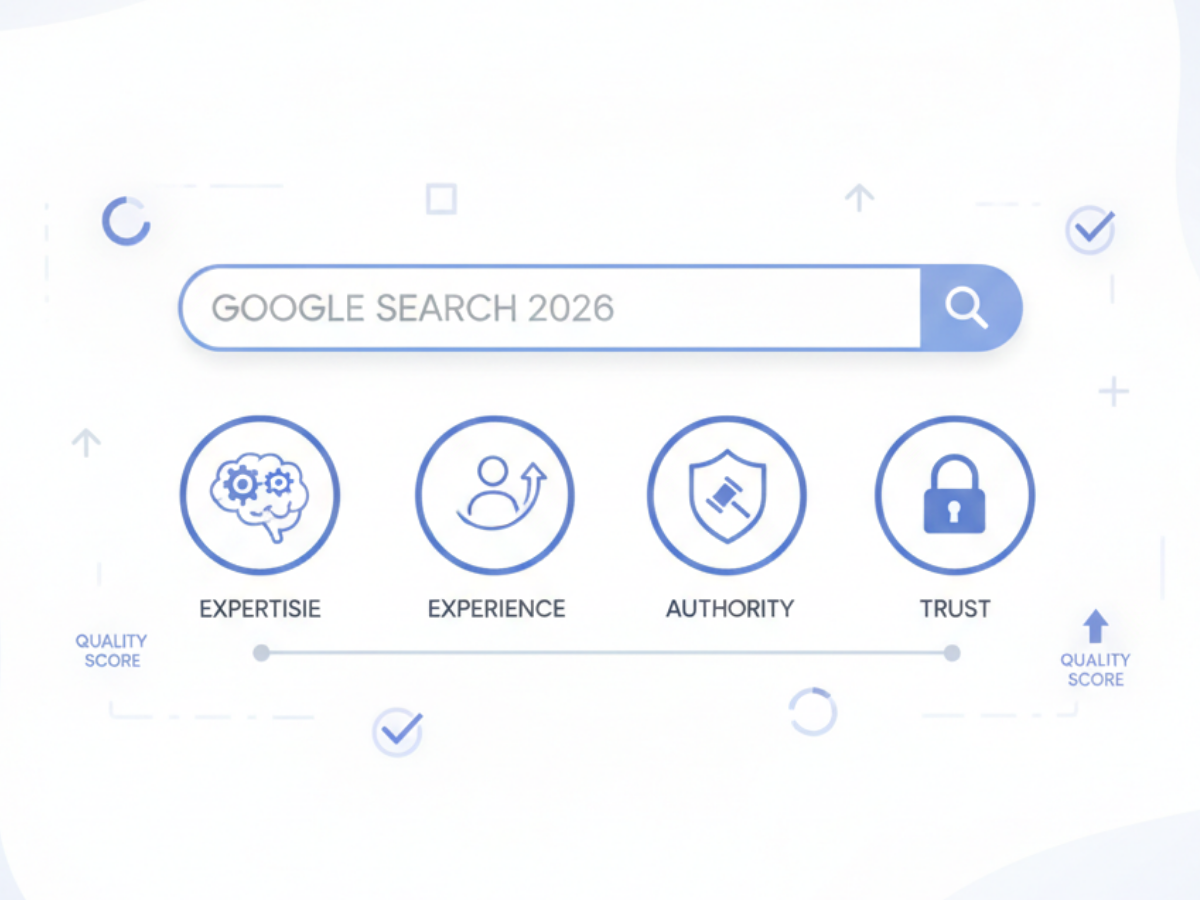
E-E-A-T (Experience, Expertise, Authoritativeness, Trustworthiness) is not a direct ranking factor but a framework that summarizes what Google’s quality raters look for. The 2026 update seems to be gauging these signals with better sophistication.
What Is E-E-A-T? Breaking Down Expertise, Experience, Authority, and Trust
- Expertise: The depth of knowledge on the topic.
- Experience: First-hand, practical experience with the product, service, or topic discussed. This “E” has become progressively vital.
- Authoritativeness: The status of the website and author within the niche.
- Trustworthiness: The overall trustworthiness, transparency, and security of the website.
Practical Ways to Demonstrate E-E-A-T on Your Website
- Clearly show author bios with authorizations and noticeable participation.
- Cite reputable sources and link to them.
- Provide clear “About Us,” “Contact,” and “Privacy Policy” pages.
- For commerce sites, showcase see-through pricing, return policies, and secure checkout badges.
- Publish detailed case studies or original research. Our Content Writing team specializes in crafting E-E-A-T-driven content.
This E-E-A-T is not something that directly affects how Google ranks websites. Instead, it is like a list of things that Google looks for when they decide if a website is good or not.
Diagnosing Traffic Drops After the Google Core Update 2026

Google Search Console (GSC) is your principal tool for identifying the impact of updates.
Step-by-Step Guide to Analyzing Top Pages and Queries
- Navigate to “Search Results” in GSC.
- Set the date range to compare 30 days before the update announcement to 30 days after.
- Check the “Total Clicks” and “Average Position” graphs for a sharp decline.
- Click on the “Pages” tab to see which specific URLs lost the most impressions and clicks.
- Click on a decreasing URL, then switch to the “Queries” tab to see which search terms it dropped for.
How to Compare Pre- and Post-Update Metrics Effectively
Don’t just look at general traffic. Export your GSC data for the two periods and compare:
- Prominence for your top 20 ranking keywords.
- Click-through rates (CTR) for key pages.
- The number of keywords your site ranks for in positions 1-10.
Platforms, like Semrush, have tools called Sensors that keep an eye on search result changes. These Sensor tools can help figure out when Google made updates and how much these updates affected the search results for your niche. This is really helpful because it shows you how your niche was affected by these changes.
Tools and Techniques for Measuring Core Update Impact
You might see a drop in your website rankings, and this could be related to your technical experience. You should check your Core Web Vitals report in Google Search Console. If you have scores for Largest Contentful Paint, Interface to Next Paint or Cumulative Layout Shift, this can hurt your rankings, especially when there is a quality update. Core Web Vitals like Largest Contentful Paint and Cumulative Layout Shift are vital for your website rankings.
Platforms like Semrush offer “Sensor” tools that track overall search result instability. This can authorize the timing of an update and show how humbly your niche was affected.
How to Spot Changes in Featured Snippets and “People Also Ask” Results
Core Updates often reshuffle rich results. Manually check your top keywords. Did you lose a Featured Snippet or a “People Also Ask” spot? This is a strong indicator that your content’s openness and structure need work for AEO Optimization.
How to Recover from the Google Core Update 2026: A Step-by-Step Guide
Recovery isn’t about one quick fix. It’s a strategic process of improving your site to meet the new standards. Here we are going to discuss some of the steps that really make a difference, and provide some clarity on the fundamental updates of Google.
Step 1: Conduct a Comprehensive Content Audit
Use SEO crawlers to find pages with low word counts, high similarity scores, or outdated publication dates. Prioritize pages that lost traffic post-update. For each declining page, revisit the target query. Does your content completely satisfy it? Compare the top 5 ranking pages. What do they cover that you’re missing? Be brutally honest about comprehensiveness.
Multiple pages targeting parallel keywords can cannibalize rankings. Consolidating overlapping content into one ultimate guide removes internal competition and creates a stronger, more authoritative resource for users and Google.
Step 2: Optimize for Semantic Clarity and Entity Relationships
Implement schema markup (like Article, Product, FAQ, How-to) to explicitly tell Google what your content is about. This aids in Entity-Based SEO for Core Updates.
Group related articles around a pillar page through internal links. This creates a clear thematic signal to Google about your site’s depth on a subject. A strong Website structure simplifies this and ensures your long-standing growth.
Ensure your site is easy to navigate. A clear hierarchy (Home > Category > Subcategory > Article) helps users and crawlers understand the context and relationship between your pages.
Step 3: Improve Technical SEO and User Experience (UX)
Enhancing Core Web Vitals: LCP, CLS, INP, and TTFB Explained
- LCP: Optimize images, use a CDN, and enable browser caching for faster loading of the main element.
- CLS: Always include size dimensions for images/videos, and avoid inserting content above existing elements.
- INP: Minimize JavaScript execution time and optimize event handlers for faster responsiveness.
- TTFB: Progress server response time through better hosting, caching, and database optimization.
Use the “URL Inspection” tool in GSC to ensure key pages are indexed. Check your robots.txt file and fix any critical crawl errors reported.
With mobile-first indexing, your mobile site is dominant. Test using Google’s Mobile-Friendly Test. Ensure touch elements are spaced, fonts are readable, and the mobile experience is not degraded.
Advanced SEO Strategies to Future-Proof Your Website Against Core Updates
Core Updates can refine local ranking signals like significance, distance, and prominence. A business with unreliable NAP (Name, Address, Phone) info or weak local citations may see a drop. Create devoted service area pages with unique content. Incorporate Long-Tail Keywords for Local SEO (e.g., “emergency plumber in [City]” instead of just “plumber”).
Leveraging Google My Business for Local SEO Success
Complete every section of your Google My Business Optimization 2026 profile. Regularly post updates, respond to reviews, and add fresh photos. This directly feeds into local importance signals. If you are jumbled about how to do all of this, then you must consider
AEO Optimization: Preparing for Voice Search and Featured Snippets
Answer questions directly and briefly. Use a natural, conversational tone. Structure content with clear H2/H3 headings that are phrased as questions.
For paragraphs targeting snippets, provide a clear, factual answer in the first 40-60 words. Use tables for “vs.” or “best” lists, and step-by-step instructions for how-tos.
Voice searches are longer and more natural. Content should match this pattern, focusing on Semantic Clarity in Content Writing and full-sentence answers.
Leveraging AI Trends in SEO for Long-Term Accomplishment
Create content that explores topics from multiple angles and contexts, forestalling related questions a user might have. Think in terms of topic clusters, not isolated keywords. This will help us create more helpful content for the people who are reading it. We can call these groups of topics “topic clusters”.
Semantic Clarity and Entity Optimization Improve Rankings
Clearly define key entities (people, places, things, concepts) in your content and link them to their broader context. This helps AI models understand your content’s depth and relevance. You need to explain what is important in your writing like people, places and things. You should also connect these things to the picture. This way computers that understand language can see how deep and relevant your writing is.
The Role of AI in Understanding User Intent and Context
Accept that AI is evaluating content more like a human expert. Focus on creating the best possible resource for a human reader, covering breadth, depth, and nuance. This is the eventual defense against recovering from Algorithm Volatility. If you are also looking for a Digital Marketing Agency that can handle all of this at once, then there is no better option than Amanradigital, which is an expert in marketing services.
How to Build a Sustainable Recovery Plan for Future Updates
The blog usually gets a slow recovery by appointing new, experience-driven reviews from actual cardholders; creating complete “ultimate guide” pillar pages; and instituting a bi-annual review update calendar. It emphasizes building authority over racing algorithms. It also depends on how much your content and graphic team is producing and what quality they are ensuring. Our Graphic Design Services, handled by a well-trained team, can support with such optimizations in no time and help you get the maximum organic distinguishability.
The Wrap Up:
Navigating the Google Core Update 2026 requires a shift in mindset. It’s a push toward creating genuinely helpful, expert-led content delivered through a technically sound website. By concentrating on the user, demonstrating real know-how and experience, and guaranteeing your site is a place to visit, you bring yourself into line with Google’s long-lasting mission. This is the most practical SEO for AI-Driven Search Engines.
If your website has been impacted and you need a strategic companion to guide your recovery and development, explore our comprehensive Digital Marketing Services. Our team specializes in building SEO resilience through custom-built tactics in content, technical SEO, and user experience. Let’s build a website that endures not just this update, but the next one too.